
When it comes to rekey or replace locks, rekeying between tenants costs less and takes less time than full lock replacement, making it the practical default for most turnovers. California law sets no rekeying mandate, but liability exposure remains if a former tenant’s key still opens the door. Sherman Oaks Lock & Safe rekeys cylinders on-site, restoring control over every unit before new tenants receive keys.
Rekey or Replace Locks for Safer Tenant Turnovers
- Rekeying often costs less than replacing locks while keeping rental properties secure between tenants.
- Texas Property Code requires landlords to change or rekey locks between tenant occupancies.
- Rekeying stops previous tenants from using old keys after they move out.
- Sherman Oaks Lock & Safe provides professional rekeying services for rental property transitions.
Rekey or Replace Locks: The Landlord’s First Decision
Rekeying is usually best when the hardware still works properly and key control is the main concern. Replacing is the better choice when a lock is damaged, outdated, ineffective, or no longer fits your access plan. That single distinction settles most landlord decisions before a technician ever arrives.
Skip the rekey when the cylinder is worn, the strike plate shifts, or the deadbolt sticks. A rekeyed lock with failing internals fails again. Usually at the worst moment, like a showing or a move-in day. You also lose nothing by replacing when the existing hardware no longer matches your security goals, such as upgrading to smart locks or a master key system.
| Decision Factor | Rekey Home | Replace Locks |
| Hardware condition | Still functions properly | Damaged, worn, or sticking |
| Key control | Main concern | Not the only issue |
| Access plan | Same layout works | Needs new features or layout |
| Cost priority | Lower upfront cost | Higher but longer-term value |
Rekey or replace locks comes down to one practical question: what is the lock’s remaining lifespan? A residential locksmith can inspect each cylinder and tell you honestly which path saves money now and which prevents a costly emergency later. For landlords managing multiple units, that inspection matters even more — one bad lock can delay a turnover and cost you rent.
How do I know if my lock is too damaged to rekey?
Stick a key in and turn it. If the key slides in but the plug spins freely, the cylinder is stripped. If the key catches halfway or requires force, internal pins are worn or broken. Both conditions mean rekeying wastes money — the new pins will fail inside the same damaged housing.
What does rekeying cost compared to replacing?
Rekeying costs less because the technician only changes internal pins and springs, not the entire hardware. Replacing adds the price of new locks plus installation labor. For a single unit, the difference is modest. For a 10-unit building, that difference multiplies. Which is why most property managers rekey between tenants and replace only when hardware fails.
When to Rekey or Replace Locks Between Tenants
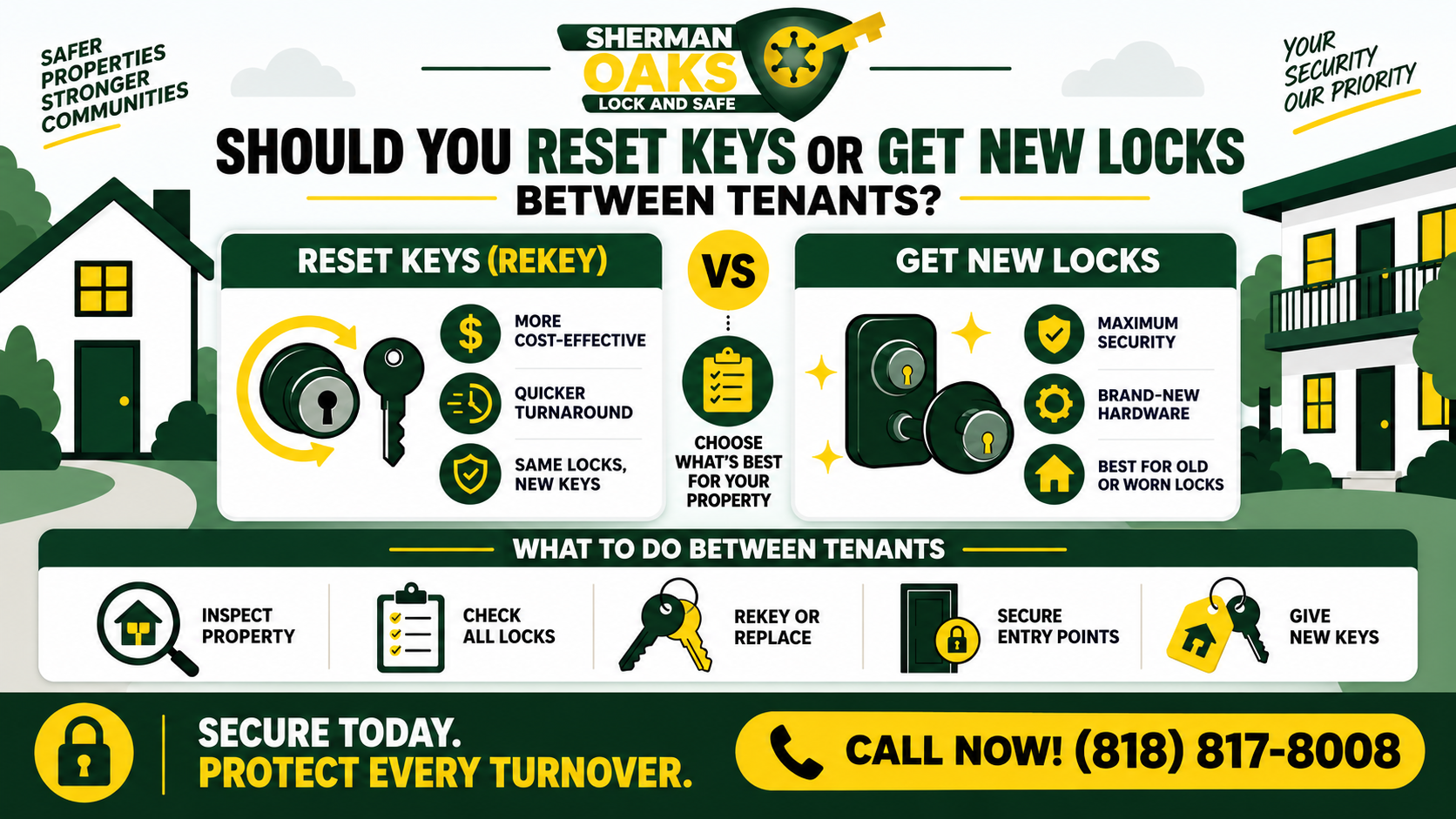
Rekeying between tenants is the fastest, most affordable way to secure a rental unit, and Sherman Oaks Lock & Safe recommends it as the standard practice for every turnover. Rekeying changes the internal pins so old keys stop working, while the existing hardware stays in place. This approach costs less up front than a full replacement and takes minutes per lock, not hours.
Is rekeying legally required for landlords in California?
No state law forces a landlord to rekey a rental property between tenants. However, skipping this step creates real liability. A previous tenant who kept a copy of the key still holds access to your unit, and that risk falls on you. Practical, ethical, and liability concerns make rekeying the responsible choice, even when no statute demands it.
When should you replace locks instead of rekeying?
Rekeying works only when the hardware remains in good condition. If a lock shows visible damage, rust, or signs of forced entry, replace locks entirely. Worn-out mechanisms fail at the worst moments, leaving your property exposed. Replacing also makes sense when you want to upgrade to high-security cylinders or standardize all units under one master key system.
How does rekeying compare to replacing locks?
| Factor | Rekey | Replace |
| Up-front cost | Lower | Higher |
| Time per lock | Minutes | 15–30 minutes |
| Hardware condition | Must be sound | Any condition |
| Key control | Full | Full |
Rekey home locks when the cylinder functions properly and you only need key control. A residential locksmith handles both tasks, but rekeying preserves your existing hardware and keeps costs predictable. For landlords managing multiple turnovers each year, rekeying between every tenant protects your investment without draining your maintenance budget. Sherman Oaks Lock & Safe brings years of experience to every job, treating each rekey as a personal mission to go above and beyond.
When to Replace Locks Instead of Rekeying
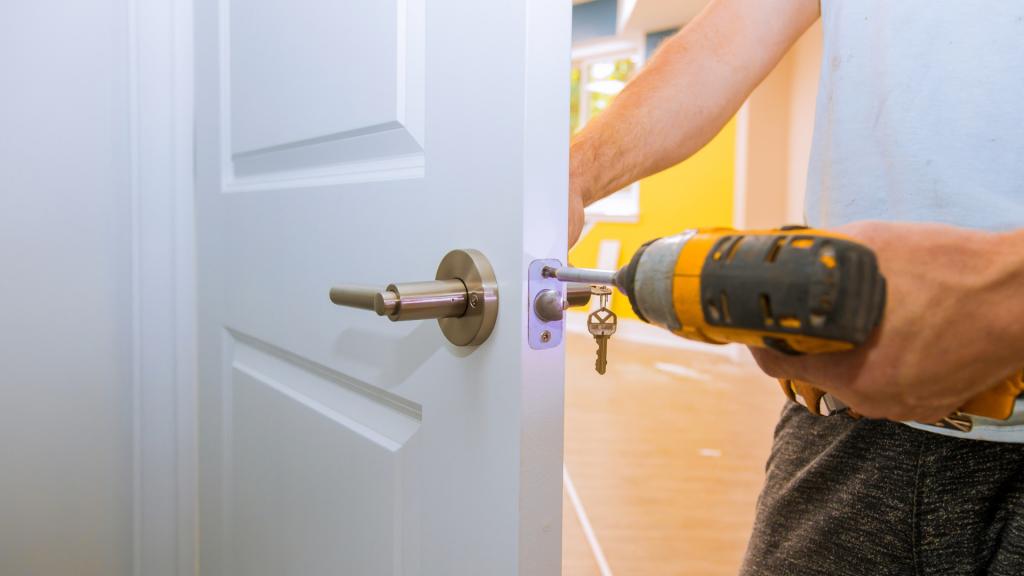
Replacing locks is the better choice when a lock is damaged, outdated, ineffective, or no longer fits your access plan. A residential locksmith can assess whether your existing hardware has physical wear, rust, or internal failure that makes rekeying pointless. Installing fresh locks eliminates the risk of a compromised mechanism failing at the worst possible moment.
What signs indicate a lock needs replacement instead of rekeying?
Look for visible damage like bent keyways, loose handles, or keys that stick or require jiggling. If a lock is over 10-15 years old, internal components may have worn down to the point where rekeying provides only temporary relief. A residential locksmith from Sherman Oaks Lock & Safe can inspect the cylinder. Latch assembly to determine whether replace locks is the safer route.
How does replacing locks improve security for your rental property?
New locks give you full control over key distribution and eliminate any uncertainty about who holds copies. Sherman Oaks Lock & Safe offers high-security lock solutions. Master key systems that provide enhanced protection compared to standard hardware. The team is fully licensed, bonded, and insured, so every installation meets professional safety standards.
| When to Rekey | When to Replace |
| Hardware is in good condition | Lock shows physical damage or rust |
| Key control is the only concern | Mechanism is outdated or ineffective |
| Budget is tight between tenants | Security needs have changed |
Choosing to replace locks rather than rekey gives you a clean slate for your property’s security. Sherman Oaks Lock & Safe provides lock installation. Lock repair services for both residential and commercial clients, ensuring your rental stays protected between every tenant turnover.
FAQ
How do I know if my lock is too damaged to rekey?
If the plug spins freely with the key inserted, the cylinder is stripped. If the key catches halfway or needs force, internal pins are worn or broken, and rekeying wastes money.
What does rekeying cost compared to replacing?
Rekeying costs less because a technician only changes internal pins and springs, not the entire hardware.
How to Decide Whether to Rekey or Replace Locks
In closing, the decision between rekeying and replacing locks hinges on your property’s condition, security needs, and budget constraints. Both approaches protect your investment and ensure tenant safety, but rekeying offers a cost-effective solution for sound locks. Replacement provides comprehensive security upgrades when damage or wear demands it. Prioritize a professional assessment to determine the best path forward for your rental property.
Ask a Local Expert
Don’t leave your rental property’s security to guesswork. Whether you need a quick rekey between tenants or a full lock replacement, Sherman Oaks Lock & Safe is ready to help you protect your investment with fast, professional service you can trust. Ask a local expert today — call Sherman Oaks Lock & Safe at 818-817-8008 to schedule your rekey or lock replacement service.