
Got a key stuck in lock and can’t pull it out? Don’t force it, as this could snap the key or damage the lock. First, make sure the key is straight and gently turn it back to its neutral position. If needed, apply a small amount of lock-safe dry lubricant and carefully wiggle the key while pulling with steady, even pressure. If it still won’t budge, contact a licensed locksmith like Sherman Oaks Lock & Safe for professional help before the problem gets worse.
Key Stuck in Lock? Common Causes You Should Know
A key stuck in lock cylinders almost always traces back to a lock cylinder problem inside the mechanism. The most common culprit is a tilted pin. One homeowner discovered exactly this after a locksmith disassembled the lock: a single pin in the 6-pin barrel had shifted out of alignment, blocking the cylinder from turning back to neutral. That tiny misalignment is all it takes to trap your key.
Three distinct forces cause a stuck house key scenario. Tension, friction, and damage each create the jam differently, and identifying which one you are dealing with determines your next move.
What is actually holding the key in place?
Tension locks the key when it remains slightly turned inside the cylinder. The internal driver pins have not fully reseated into their channels, so the plug cannot rotate freely. Friction builds from dirt, metal wear, or dried-out lubrication coating the pin chambers. A door lock jammed by debris behaves like a gritty bearing: it binds instead of sliding. Damage rounds out the list. A bent key, a broken spring, or a fractured wafer inside the cylinder physically obstructs movement.
Can a dirty lock really trap a key?
Yes. Friction from accumulated grime, worn internal components, or absent lubrication creates enough resistance to seize the key. The pins and springs inside a lock cylinder operate within extremely tight tolerances. Even a thin film of dust or oxidized metal particles disrupts that clearance. What feels like a solid jam is often just friction welding the key in place.
When these issues resist gentle correction, key extraction becomes a job for a professional house locksmith. Sherman Oaks Lock & Safe provides expert, reliable locksmith services for residential security needs, including stuck key removal and lock cylinder repair. Forcing a trapped key risks snapping it off inside the lock, which turns a simple service call into a far more expensive extraction.
Key Stuck in Lock and Won’t Turn? Try These Safe Steps
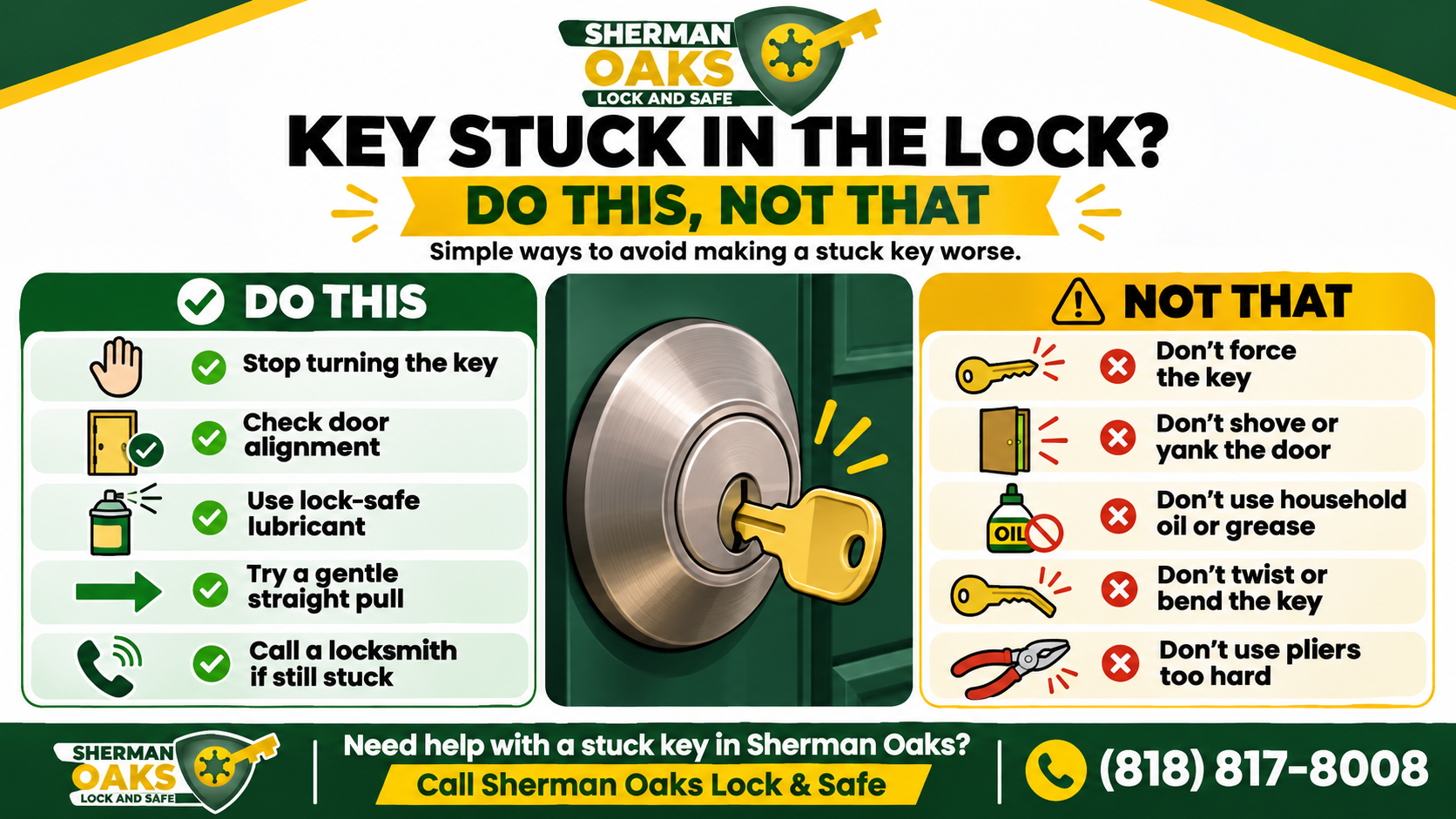
Stop forcing the key immediately. A key stuck in lock that refuses to turn signals a lock cylinder problem, and continued pressure snaps the key inside the mechanism. That turns a simple fix into an expensive key extraction job.
Robert Easter, a Certified Master Locksmith writing for Easter’s Lock & Security Solutions, confirms that the first step is stopping all force. A stuck house key binds because the cylinder pins are misaligned, debris blocks the keyway, or the key itself is worn. Forcing it guarantees damage.
Follow these steps in order:
- Release all pressure on the key and return your grip to neutral.
- Keep the key perfectly straight inside the keyway. Angled pulling bends the key and worsens the bind.
- Apply a dry lubricant like graphite powder if you have it. Wet lubricants attract dirt and create future problems.
- Gently work the key with tiny back-and-forth movements while guiding it back to the neutral position.
- Pull the key out with light, even pressure. Never yank or twist.
Why does my key suddenly stop turning?
A key won’t turn when internal pins seize, the cylinder wears down, or temperature changes cause metal to expand. A door lock jammed by cold weather behaves differently than one clogged with debris. Identifying the cause determines whether lubrication solves the problem or professional repair is necessary.
When should I call a house locksmith instead?
Call a house locksmith the moment you feel resistance that lubrication does not resolve. Sherman Oaks Lock & Safe dispatches technicians 24 hours a day for emergency lockouts and stuck key situations. The team arrives fully licensed, bonded, and insured, protecting you and your property during every service call. Delaying professional help risks a broken key extraction that costs more and leaves your home unsecured.
Key Stuck in Lock? How to Remove It Without Breaking It
Removing a key stuck in lock hardware requires patience, not force. A stuck house key usually binds because of friction, misaligned pins, or a cylinder that has not returned to neutral. Follow these steps in order before calling for professional help.
Step-by-step safe removal
- Stop pulling immediately. Jerking or twisting a stuck key snaps the blade inside the cylinder, turning a simple fix into a key extraction job.
- Straighten the key. Keep the key perfectly aligned with the lock body. Any angle increases friction against the pins.
- Apply a dry lubricant. Graphite powder works best for a lock cylinder problem. Avoid oil-based sprays, which attract dust and gum up the mechanism over time.
- Gently work the key. Wiggle the key with light, even pressure while turning it back to the neutral position. The goal is to realign the internal pins.
- Pull with steady force. Once the key returns to neutral, slide it out slowly. Do not yank.
What if the key still won’t come out?
A key won’t turn or release when a pin inside the cylinder has tilted or broken. One homeowner reported that a locksmith fixed the problem in 15 minutes by taking the lock apart. The culprit was a single tilted pin in a 6-pin lock that blocked the barrel from moving.
When should I call a house locksmith?
Call a house locksmith before the key snaps. Sherman Oaks Lock & Safe technicians are highly experienced and equipped with the newest technology for safe key extraction. A professional disassembles the lock, removes the stuck key, and repairs the cylinder without damaging your door hardware. For vehicle-related key problems, car locksmith services provide the same careful approach.
What lubrication should I avoid on a door lock jammed with a key?
Oil-based lubricants like WD-40 cause more harm than good inside a door lock jammed with a key. These products attract dirt and dust, turning minor friction into a grinding, stuck mechanism. A lock cylinder problem worsens over time when the wrong lubricant leaves behind a sticky residue that traps debris. Dry lubricants, specifically graphite powder or PTFE-based sprays, keep the internal pins moving freely without creating a magnet for contaminants.
Why does WD-40 make a stuck key worse?
WD-40 penetrates quickly but leaves an oily film. That film grabs airborne dust and microscopic metal shavings already inside the lock. Within weeks, the lubricant transforms into a gritty paste that binds the pins and the plug. The key then requires more force to turn, accelerating wear on the brass surfaces. Brass is a soft metal. After long-term use, the key surface becomes rounded and fails to move the tumblers correctly. A stuck house key that once wiggled free now seizes completely, and the risk of snapping the key inside the cylinder climbs sharply.
What about heat or cold on a jammed lock?
Never apply heat to a lock holding a key stuck in lock. Heat makes metals expand. A flame or heat gun swells the cylinder body and the key alike, tightening the already-frozen tolerances. Cold makes metals contract. If seasonal cold has shrunk the components unevenly, heating one side creates a thermal mismatch that locks the plug in place. The usual 5-pin tumbler lock tolerates only thousandths of an inch of movement before binding. Forcing a key under thermal stress snaps brass keys and cracks cylinder housings.
Key extraction after a break demands specialized tools and a steady hand. Sherman Oaks Lock & Safe offers free consultations to assess and resolve lock cylinder problems safely. A trained technician disassembles the lock, removes broken fragments, and restores function without damaging the door or the hardware.
Key Stuck in Lock? When to Call a Professional Locksmith
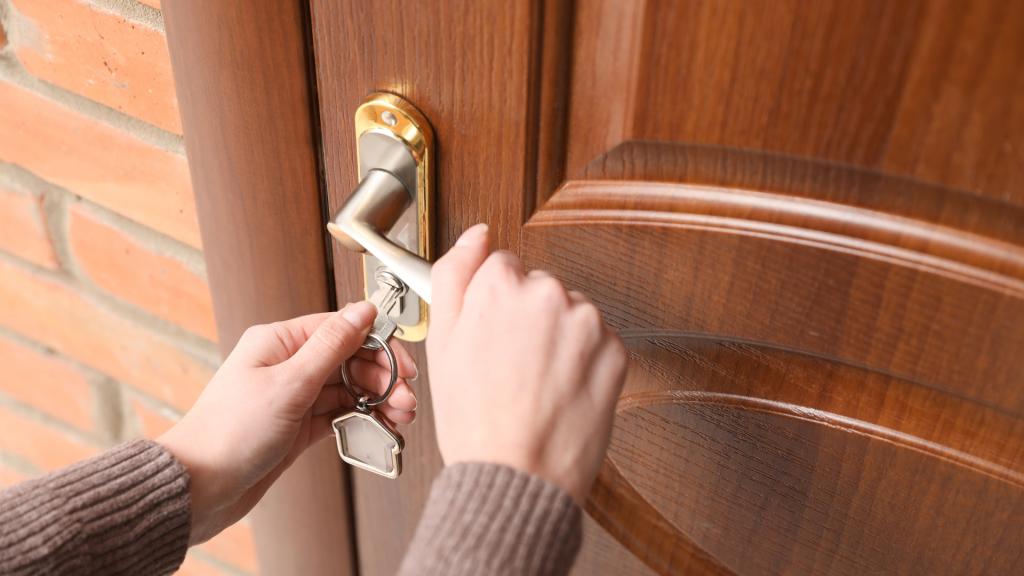
Call a house locksmith the moment gentle removal techniques fail. Continuing to force a key stuck in lock risks snapping the key inside the cylinder, which turns a simple fix into an expensive repair. A stuck house key that resists dry lubricant and careful wiggling signals a mechanical fault you cannot solve without disassembly.
What happens if I keep pulling on a stuck key?
The key weakens with every pull. A broken key fragment lodged deep in the lock cylinder problem requires specialized key extraction tools. Robert Easter, a Certified Master Locksmith at Easter’s Lock & Security Solutions, warns that a key refusing to budge means the lock needs professional attention before the key breaks. That break transforms a 15-minute service call into a cylinder replacement.
How fast can a locksmith fix a jammed door lock?
A trained technician often resolves a door lock jammed in about 15 minutes. One documented case involved a tilted pin inside a 6-pin lock that prevented the barrel from moving. The locksmith disassembled the lock cylinder, corrected the misaligned pin, and restored function on the spot. You lose nothing by calling early. You risk a broken key and a ruined lock by waiting.
Sherman Oaks Lock & Safe provides 24-hour emergency locksmith dispatch for urgent key extraction across Sherman Oaks, Van Nuys, Beverly Hills, Studio City, and Bel Air. Technicians arrive with the tools to disassemble your lock cylinder, remove the stuck key, and repair or replace damaged components. If you face a lockout after hours, fast after-hours lockout assistance gets you back inside without damaging your door or frame.
FAQ
What should I do first when a key gets stuck in a lock?
Stop forcing the key immediately. Keep it straight, spray graphite powder into the keyway, and gently wiggle the key while turning it back to the neutral position.
What causes a key to get stuck in a lock?
A stuck key almost always traces back to a lock cylinder problem. Tension, friction, or damage each create the jam differently.
When should I call a locksmith for a stuck key?
Call a licensed locksmith like Sherman Oaks Lock & Safe if gentle correction fails. Forcing a trapped key risks snapping it off inside the lock.
Prevent Costly Lock Damage When Your Key Is Stuck in Lock
A stuck key that resists gentle removal signals a mechanical fault requiring professional disassembly. Calling a locksmith before the key snaps prevents a simple fix from becoming a cylinder replacement. A trained technician corrects the internal problem and restores your lock without damaging your door hardware.
Damage Prevention
Don’t risk a broken key or a damaged lock. Contact Sherman Oaks Lock & Safe before a stuck key becomes a broken lock: call 818-817-8008 for prompt, professional help.