
A wall or floor safe offers different benefits depending on your security needs. A wall safe provides quick, accessible storage for everyday valuables, while a floor safe offers concealed, in-ground installation for added protection. Sherman Oaks Lock & Safe provides safe installation and repair, emergency locksmith services, commercial and residential locksmith services, automotive locksmith services, lock repair, lock installation, access control, CCTV, and safe cracking. Your choice depends on whether convenient access or discreet storage matters most.
What Defines a Hidden Wall or Floor Safe?
A hidden safe is a secure storage container concealed within a building’s structure. Its primary purpose is keeping valuables completely out of sight, which denies a burglar the opportunity to even locate the target.
You face a real risk without proper concealment. A visible safe immediately draws attention and becomes the focal point of an intrusion. By design, a hidden safe integrates directly into a wall or floor so it can be covered by a painting, a piece of furniture, or flooring. The safe vanishes into the room, protecting jewelry, critical documents, and irreplaceable personal items far more effectively than a freestanding box ever could. Barska notes that these units are engineered for seamless installation beneath the surface of a living space.
Where are hidden safes used most often?
Wall safes represent a standard security measure in private residences and businesses alike. Sherman Oaks Lock & Safe handles professional installations for both sectors, ensuring the safe sits flush between studs or deep within concrete. Typical contents include cash, sensitive paperwork, and jewelry. The concealment factor works for you here because a wall safe behind a framed photo offers no visual cue to an intruder, while remaining instantly accessible to you.
How does a floor safe differ as a hiding place?
A floor safe takes concealment a step further by sitting below ground level inside a concrete slab. The only visible component is a recessed door that sits flush with the surrounding flooring. This orientation severely limits tool attack angles because the sides and back of the safe are encased in solid concrete. You gain extreme burglary resistance and the option to hide the door completely under a rug, making detection exceptionally difficult during a quick smash-and-grab attempt.
Wall or Floor Safe: How Does a Floor Safe Compare?
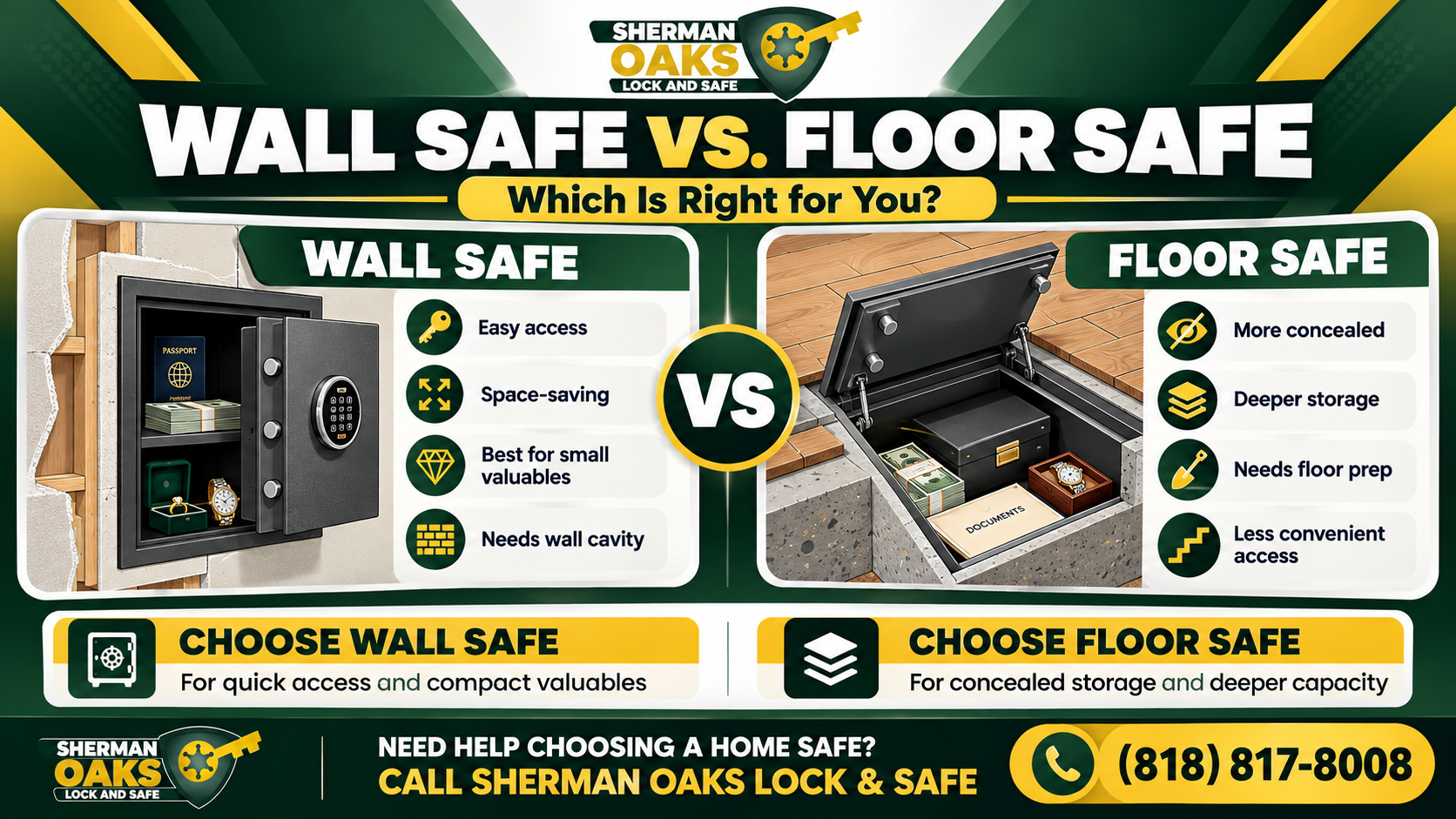
A floor safe delivers concealed, in-ground protection by embedding directly into concrete. The door sits flush with the floor surface, making the safe body nearly impossible to access from the sides or back.
You gain two immediate advantages with this design. First, the recessed door accepts a cover like a rug or furniture, keeping the safe completely out of sight. Second, the concrete encasement restricts physical access to the safe body. Burglars cannot tip, carry, or pry the unit from multiple angles. That limitation transforms a standard steel box into a formidable barrier.
What makes a floor safe harder to break into?
The installation method does the heavy lifting. Concrete surrounds the safe on all sides except the door face. Attackers lose the leverage and working space needed for power tools or pry bars. Dean Safe confirms that correct installation in concrete restricts access to the safe body, directly enhancing burglary resistance. A wall safe, by contrast, exposes more surface area inside a stud cavity.
How does concealment differ from a wall safe?
A floor safe hides below foot level where nobody looks. The recessed door vanishes under a floor mat, a piece of furniture, or even carpeting. Wall safes typically sit behind a picture or mirror at eye level, a location burglars check routinely. Floor-level concealment exploits a natural blind spot in any room.
Sherman Oaks Lock & Safe helps you evaluate these tradeoffs with a free consultation. A technician assesses your floor construction, your security priorities, and the valuables you need to protect before recommending a specific model. That guidance prevents costly installation mistakes and ensures the safe matches your actual risk profile.
Wall or Floor Safe: What Are the Benefits of a Wall Safe?
Wall safes deliver strong concealment and quick access for valuables you need regularly. A recessed installation between wall studs keeps the safe hidden behind a picture, mirror, or furniture while maintaining easy reach.
Wall safe options excel at blending security with everyday convenience. The Safe & Vault Store notes that wall safes are excellent for keeping valuable items hidden and secure inside the home or office. You gain protection without sacrificing floor space or accessibility. A properly installed wall safe disappears from view yet opens in seconds when you need cash, jewelry, or important documents.
What can I store in a wall safe?
Storage capacity varies dramatically across models. Wall safes range from small models designed for jewelry or handguns to larger specialty units that require custom deep cavities for storage, according to the Safe & Vault Store. Fireproof document storage and cash compartments occupy the middle range. This flexibility lets you match the safe to your specific valuables rather than overpaying for unused space.
How does installation affect wall safe security?
Installation depth directly impacts concealment quality. Some wall safes feature adjustable depths for custom installations, which adds another layer of security. A deeper recess makes the safe harder to detect and more difficult to pry open. Adjustable models accommodate non-standard wall construction, but a poorly fitted safe betrays its location through uneven drywall or misaligned doors.
Sherman Oaks Lock & Safe provides professional safe installation and repair for homes and businesses. Expert mounting ensures the safe sits flush, operates smoothly, and resists tampering. A poorly installed wall safe betrays its location through uneven drywall or misaligned doors. Professional placement eliminates these telltale signs while maximizing the security your investment delivers.
Wall or Floor Safe: Which Offers Better Protection Against Burglary?
A floor safe embedded in concrete delivers stronger burglary resistance than a wall-mounted unit. The concrete surround blocks access to the safe’s sides and back, leaving only the recessed door exposed. A hidden safe mounted in a wall cavity faces different risks. Wall safes sit between studs, and their placement in a wall leaves more surface area vulnerable to forced entry attempts.
Sherman Oaks Lock & Safe installs both types with professional precision. The team is fully licensed, bonded, and insured, so your installation meets security standards from the start. Sherman Oaks Lock & Safe offers services including Emergency Locksmith, Commercial Locksmith, Residential Locksmith, Automotive Locksmith, Lock Repair, Lock Installation, Access control, CCTV, and Safe Cracking.
How does concrete installation improve a floor safe’s security?
Concrete encasement removes the angles an intruder needs. The door sits near floor level, and the surrounding concrete limits access to the sides and back. A burglar cannot pry, drill, or cut what the concrete shields. You can also hide the recessed door beneath flooring or a cover, which adds concealment to the structural defense.
Are wall safes easier to attack than floor safes?
Wall safes mount between studs, which leaves the safe body partially exposed inside the wall cavity. Forced entry tools have more surface to work against compared to a concrete-embedded floor safe. The wall itself offers less resistance than poured concrete. Sherman Oaks Lock & Safe recommends pairing any wall safe with a high-security lock to offset this exposure.
| Feature | Floor Safe | Wall Safe |
| Side and back access | Blocked by concrete | Partially exposed in wall cavity |
| Concealment | Hidden beneath flooring or cover | Visible unless covered by decor |
| Forced entry resistance | High | Moderate |
| Professional installation | Required for concrete embedding | Required for stud mounting |
Your choice depends on the threat level you face. Floor safes win on raw burglary resistance. Wall safes trade some of that resistance for easier access and installation flexibility.
Wall or Floor Safe: Which Best Fits Your Security Needs?
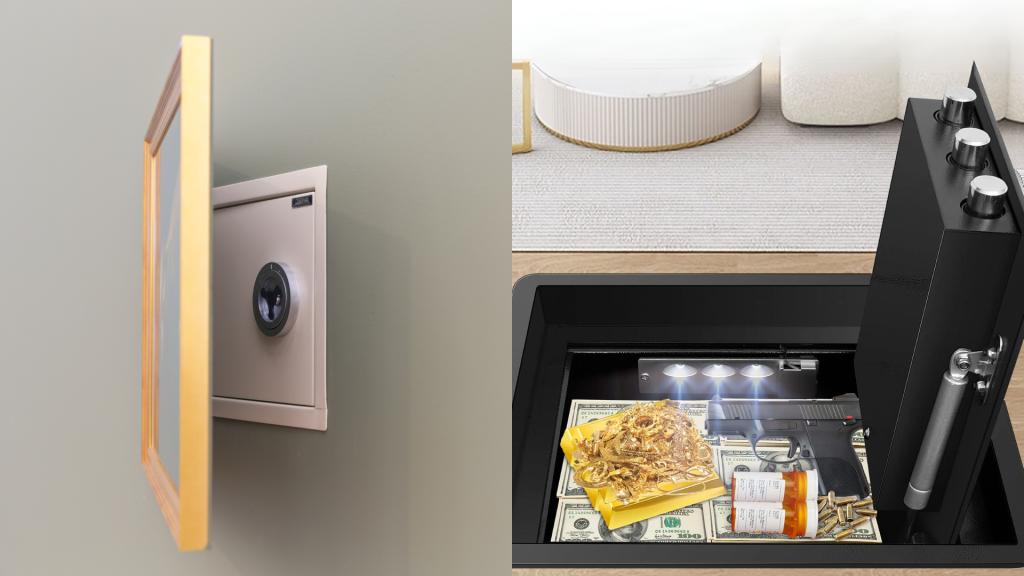
The right safe depends on your concealment priorities, installation constraints, and how quickly you need access. A floor safe delivers superior burglary resistance by limiting attack angles to the door face only. A wall safe offers faster access at eye level but exposes more of the safe body to potential tampering. Sherman Oaks Lock & Safe provides expert guidance and installation for both types, ensuring optimal security for your home.
Concrete surrounds the entire safe body on five sides. Burglars face a single reinforced door flush with the floor, often hidden beneath a rug or furniture. This design eliminates leverage points and side-wall attacks. The trade-off is installation complexity. You need a concrete slab and professional cutting equipment. Sherman Oaks Lock & Safe technicians handle the full installation with up-to-date tools and free consultations in your neighborhood.
When does a wall safe make more sense?
Wall safes fit between studs and install in under two hours. You gain quick, standing-height access to documents, jewelry, or cash without bending down. The hidden safe disappears behind a picture or mirror, keeping valuables out of sight during daily routines. The limitation is depth. Standard wall cavities restrict interior space to roughly 3.5 inches. For bulkier items or maximum burglary protection, a floor safe remains the stronger choice.
| Factor | Floor Safe | Wall Safe |
| Burglary resistance | Highest; concrete on five sides | Moderate; exposed body in wall cavity |
| Concealment | Excellent; under flooring or furniture | Excellent; behind wall decor |
| Installation | Requires concrete slab; professional install | Fits between studs; faster install |
| Access speed | Slower; at ground level | Fast; at eye level |
| Interior depth | Deep; fits large items | Shallow; limited by stud depth |
Your specific valuables dictate the final call. Sherman Oaks Lock & Safe also offers 24-hour emergency mobile services for urgent safe needs. You never wait when security is compromised.
FAQ
Which is more secure, a wall safe or a floor safe?
A floor safe provides superior fire and theft protection through concealed, in-ground installation, with concrete encasement restricting access to the safe body.
Where should I install a hidden safe in my home?
Wall safes hide behind pictures or mirrors at eye level. Floor safes conceal below foot level under rugs or furniture.
Does Sherman Oaks Lock & Safe install both wall and floor safes?
Sherman Oaks Lock & Safe offers safe installation and repair for both wall and floor safes in residential and commercial settings.
Wall or Floor Safe: Find the Right Balance Between Access and Protection
The choice between a wall and floor safe comes down to your access needs versus your burglary resistance requirements. A floor safe embedded in concrete provides the strongest defense. A wall safe offers quicker, standing-height access for smaller valuables. Sherman Oaks Lock & Safe installs both types with professional precision, ensuring your chosen safe delivers the security you expect.
Ready to Choose the Right Safe for Your Home?
Whether you need the quick access of a wall safe or the burglary resistance of a concealed floor safe, Sherman Oaks Lock & Safe is here to help you decide with confidence. Our licensed, bonded, and insured technicians will assess your space, your valuables, and your security priorities, then install the safe that fits your needs.
Call Sherman Oaks Lock & Safe at 818-817-8008 today to schedule your free consultation and get expert guidance on choosing the right safe.