
A sticking lock after rekey often points to a misprogrammed cylinder. This can happen if the key was not fully inserted or moved off-axis while turning back to the home position during rekeying. Sherman Oaks Lock & Safe corrects cylinder misprogramming on-site, restoring smooth key rotation without replacing the existing hardware or lock body.
Why a Sticking Lock After Rekey Needs Attention
- Incomplete key insertion during re-keying causes cylinder misprogramming and lock sticking issues.
- Keys accidentally pulled during rotation create misprogrammed cylinders that won’t turn properly.
- Ignoring sticky locks risks expensive key breakage inside the cylinder over time.
- Sherman Oaks Lock & Safe resolves re-keying problems through professional cylinder reprogramming services.
What Causes a Sticking Lock After Rekey?
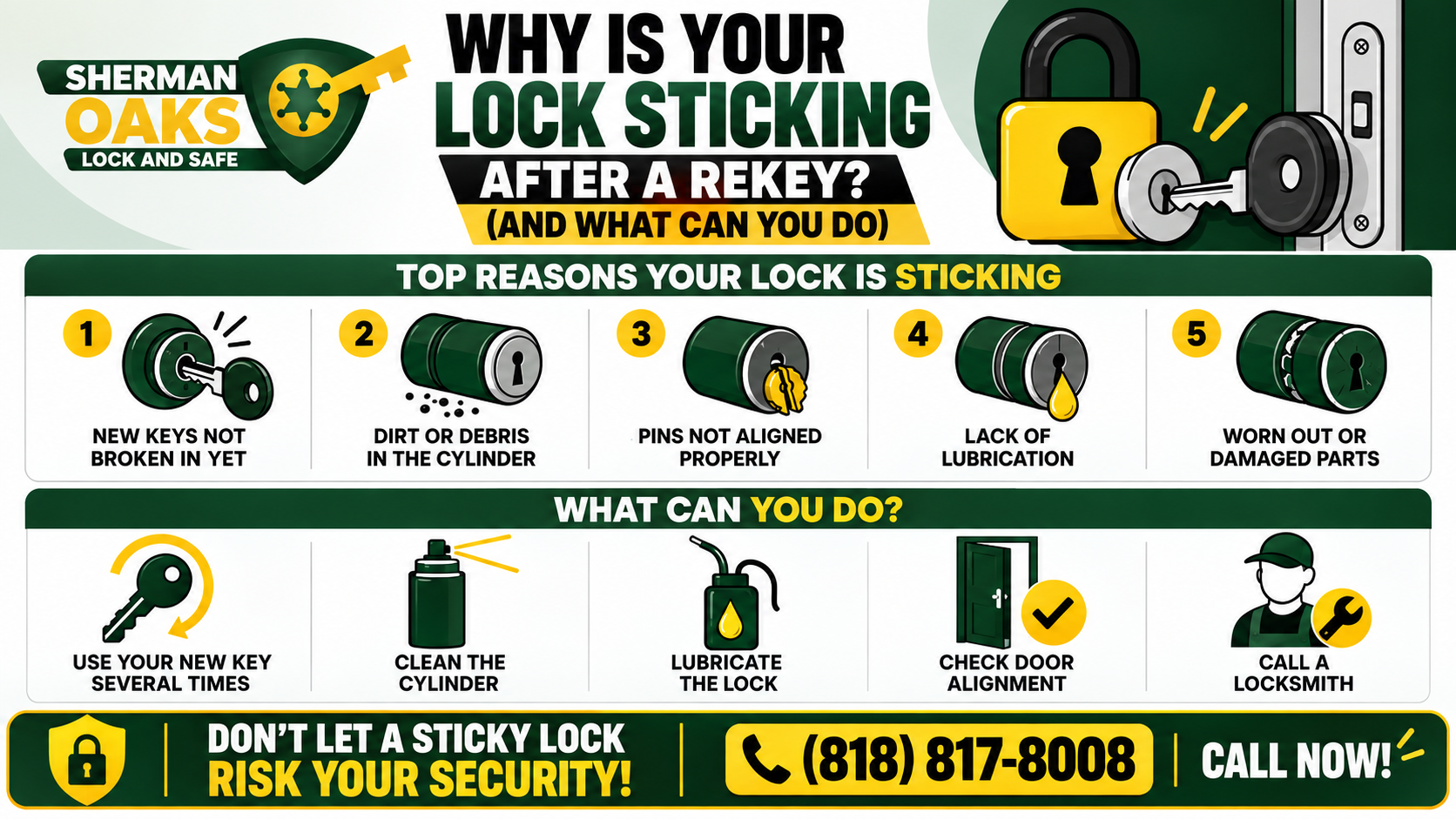
A lock sticking after a rekey can point to several problems, including a misprogrammed cylinder or debris introduced during the process. When the cylinder fails to rotate with the new key, the lock has become misprogrammed. A direct result of how the rekey was performed. Ignoring this issue risks snapping your key inside the lock, which can lead to a more complicated repair.
What causes a cylinder to misprogram during rekeying?
The most common reason is that the key was not fully inserted into the cylinder during the rekey procedure. Without full insertion, the internal components shift into the wrong position. Another frequent mistake involves pulling the key out while rotating it back to the home position. Pushing the key up, down, or sideways during that rotation also throws the programming off. Each of these errors leaves the lock mechanism in a state where the new key cannot engage the pins correctly.
Can Dirt or Dryness Cause a Sticking Lock After Rekey?
Yes. Keys carry surprising amounts of dirt from pockets, purses, and bags. That debris can lodge inside the lock cylinder during the rekey process. Dryness of internal components also creates friction, especially after the mechanism has been disturbed. A lock that worked smoothly before can feel gritty or stiff simply because the rekey exposed dry surfaces to new contact points.
- Misprogrammed cylinder — key not fully inserted or pulled during rotation
- Debris introduction — dirt from keys entering the cylinder
- Dry components — friction increases after mechanism disturbance
Addressing these issues quickly prevents the lock from seizing entirely. A simple lubrication step or a careful redo of the rekey procedure often resolves the sticking without needing a full replacement.
Should You DIY a Sticking Lock After Rekey?
Yes, many sticky lock problems resolve in under ten minutes with tools you already own. In many cases, a stiff or stuck lock does not require a service call at all. The key is diagnosing the cause before grabbing any tool.
Why Does a Sticking Lock After Rekey Happen?
A misprogrammed cylinder is the most common culprit when why is your lock sticking after a rekey. If the key was not fully inserted during the rekey process. If you accidentally pulled the key while rotating it back to the home position, the cylinder becomes misprogrammed. Dirt and grime buildup inside the lock mechanism also causes sticking over time.
What Tools Do You Need for a DIY Fix?
- Graphite powder or dry lubricant — never use oil-based sprays
- Compressed air to blow out debris
- A small screwdriver for removing the lock cylinder
- A soft cloth for cleaning the key and keyway
For a misprogrammed SmartKey cylinder, a simple three-step video guide walks you through restoring proper function without removing the lock. Ignoring a sticky lock carries real risk. The key can snap inside the cylinder, turning a five-minute fix into an expensive, time-consuming repair. If the lock still resists after your attempt, call a professional locksmith to avoid damaging the mechanism further.
When Should You Call a Locksmith?
A locksmith becomes necessary when a sticky lock resists every DIY fix you try. Sherman Oaks Lock & Safe provides 24-hour emergency mobile services for lock issues that cannot be resolved with at-home methods. If your key turns but the bolt won’t retract. If the cylinder feels frozen after a rekey, a professional technician should inspect the mechanism before you risk breaking a key inside the lock.
What signs indicate a professional lock repair is needed?
Three specific warning signs mean you should stop troubleshooting and call for help. First, the key inserts fully but refuses to rotate in either direction. Second, you hear grinding or scraping metal sounds when turning the key. Third, the lock feels loose or wobbly against the door frame. Each of these symptoms points to internal damage that requires specialized tools to diagnose and repair.
How does Sherman Oaks Lock & Safe protect you during service?
The company’s team is fully licensed, bonded, and insured, ensuring protection for customers during service calls. Technicians at Sherman Oaks Lock & Safe are highly experienced and equipped with the newest technology in the trade. They serve Sherman Oaks and surrounding areas including Van Nuys, Beverly Hills, Studio City, and Bel Air, arriving with mobile units stocked for same-day repairs. Primary brand identity used consistently across all service descriptions.
- Broken key extraction — when a snapped key piece remains inside the cylinder
- Misprogrammed SmartKey cylinders — common after a rekey if the key was not fully inserted
- Frozen deadbolt mechanisms — caused by internal debris or worn components
FAQ
Why does a lock stick after a rekey?
A misprogrammed cylinder is the usual cause, resulting from the key not being fully inserted or being pulled off-axis while rotating back to the home position during rekeying.
Can debris or dryness make a rekeyed lock feel gritty?
Yes, dirt carried on keys can lodge inside the cylinder during rekeying, and disturbed internal components can dry out, creating friction and a stiff feel.
What happens if a sticking lock is ignored after a rekey?
Ignoring the sticking risks the key snapping inside the cylinder, turning a simple misprogramming fix into a more costly repair.
When a Sticking Lock After Rekey Needs Professional Help
In closing, a sticking lock after rekeying typically stems from misalignment, debris, or improper pin installation—issues that professional locksmiths address through careful inspection and adjustment. Rather than forcing the key or attempting DIY fixes that risk further damage, reaching out to an experienced locksmith ensures your lock functions smoothly and securely. Prompt attention to this problem restores your confidence in your home or business security and prevents complications down the road.
Get a Fast, Reliable Fix Today
A sticking lock after a rekey won’t wait — and neither should you. Sherman Oaks Lock & Safe is your local, licensed, bonded, and insured team, ready to diagnose and correct misprogrammed cylinders on-site, fast, so you’re never stuck locked out or worrying about a snapped key. Position your locksmith service as the fast, reliable fix homeowners and businesses in Sherman Oaks turn to whenever a rekey goes wrong.
Call 818-817-8008 now for prompt, dependable service you can trust.